What Does a Reading of 80 Ohms Mean
The importance of matching headphones with audio sources in the pursuit of loftier fidelity audio.
This article was crafted with love from Trav and Timothy (Editor). Timothy goes by /u/ohaivoltage in Reddit and he happens to own an awesome website, wtfamps.com.
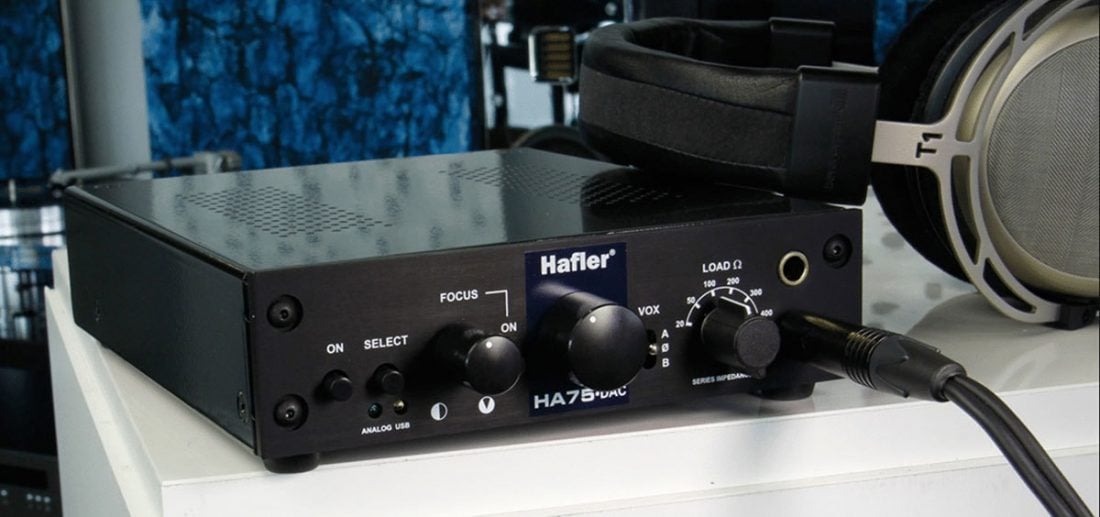
Impedance is one of the bones specifications included with near every quality pair of headphones and most audio sources (DAP, telephone or amplifier). Everyone has seen the measurement, but I'one thousand betting that few really sympathize the importance when making purchasing decisions.
Ane of the first questions yous will see in headphone forums is if a dedicated amplifier volition be needed for a new headphone purchase. Lots of opinions fly around, ofttimes contradictory, so permit's take a look at the science behind the answer.
For the sake of simplicity, this article will be limiting itself to examples using headphones rather than IEMs or ear buds, simply the basic concepts remain the same.
The Basic Concept of Impedance
When describing impedance, in that location are several terms that yous should enlightened of. When viewed as a unproblematic electronic circuit, the impedance of the audio source may be written as output (or source) impedance, while the impedance of the headphones may be considered load impedance.
Headphone impedance is typically rated between eight-600 ohms, with a standard around 32 ohms condign increasingly common. Sound source impedance is typically very low, ofttimes less than 4 ohms and approaching 0 ohms in many cases, only it may be as high as 120 ohms or more for specialized tube amplifiers, specifically output transformer-less (OTL) types.
Headphones are different than dwelling stereos, as speakers are commonly in a very narrow range between iv-eight ohms. Car stereos typically reside in the range of 2-16 ohms.
Impedance Matching
Impedance matching is the interaction between the source impedance (the device the headphone is fastened to) and the headphone impedance. To ensure the highest audio quality, the source and the headphones must pair well. As you may have guessed from the impedance range examples in a higher place, a match doesn't mean 'both the aforementioned' but rather that they are 'complementvary.'
"The unmarried most important technological cistron to consider when looking for a headphone amplifier that works well with your ear phones is impedance matching." – RHA Audio
We will wait at the rules around finding that perfect match in some detail below. For now, it is plenty to understand that audio source and headphone impedances should non be equal and that headphones with different impedances will require unlike sources. Equal source and load impedance maximize the power we can transfer between the amp and headphones, simply this typically reduces frequency bandwidth and so information technology's non what we want in high fidelity.
In full general, depression impedance headphones (which nosotros volition hereby define as below 50 ohms) are designed to work properly with portable devices, as they tin efficiently reproduce adequate sound quality and volume from a depression voltage device.
Conversely, high impedance headphones (50 ohms and greater) unremarkably crave robust amplification to perform their best.
Why are some Headphones High or Depression Impedance?
Headphones with impedance greater than 100 ohms are typically older or professional studio specific designs. Pre-1990s receivers and pro audio equipment frequently used resistors to attenuate the speaker output power (wattage) to create a simple and cheap headphone circuit.
These headphone circuits consequently worked best with loftier impedance headphones. In some cases, high impedance headphones were designed to concatenation multiple pairs in parallel for pro studio applications. Without getting too heavily into the math behind it, the high impedance load preserves the source output voltage to be able to drive multiple pairs of headphones.
This was and then prevalent that even every bit recently every bit 1996, the standard recommended source output resistance was 120 ohms, and went then far as to claim that source impedance had very little effect on the performance.
Stereophile did non mince words with their stance of that standard and merits.
"Whoever wrote that must live in a fantasy world. Many of the headphones currently available… typically display a quite wide variation of impedance with frequency."
Most modern headphones are designed to entreatment to equally wide a market every bit possible, and that means they must play well on mobile devices. The sale of hundreds of millions of battery powered music players, including the ubiquitous iPod and more recently smartphones, has fabricated lower impedance (around 32 ohms) headphones the norm.
Headphone Models with Multiple Impedances
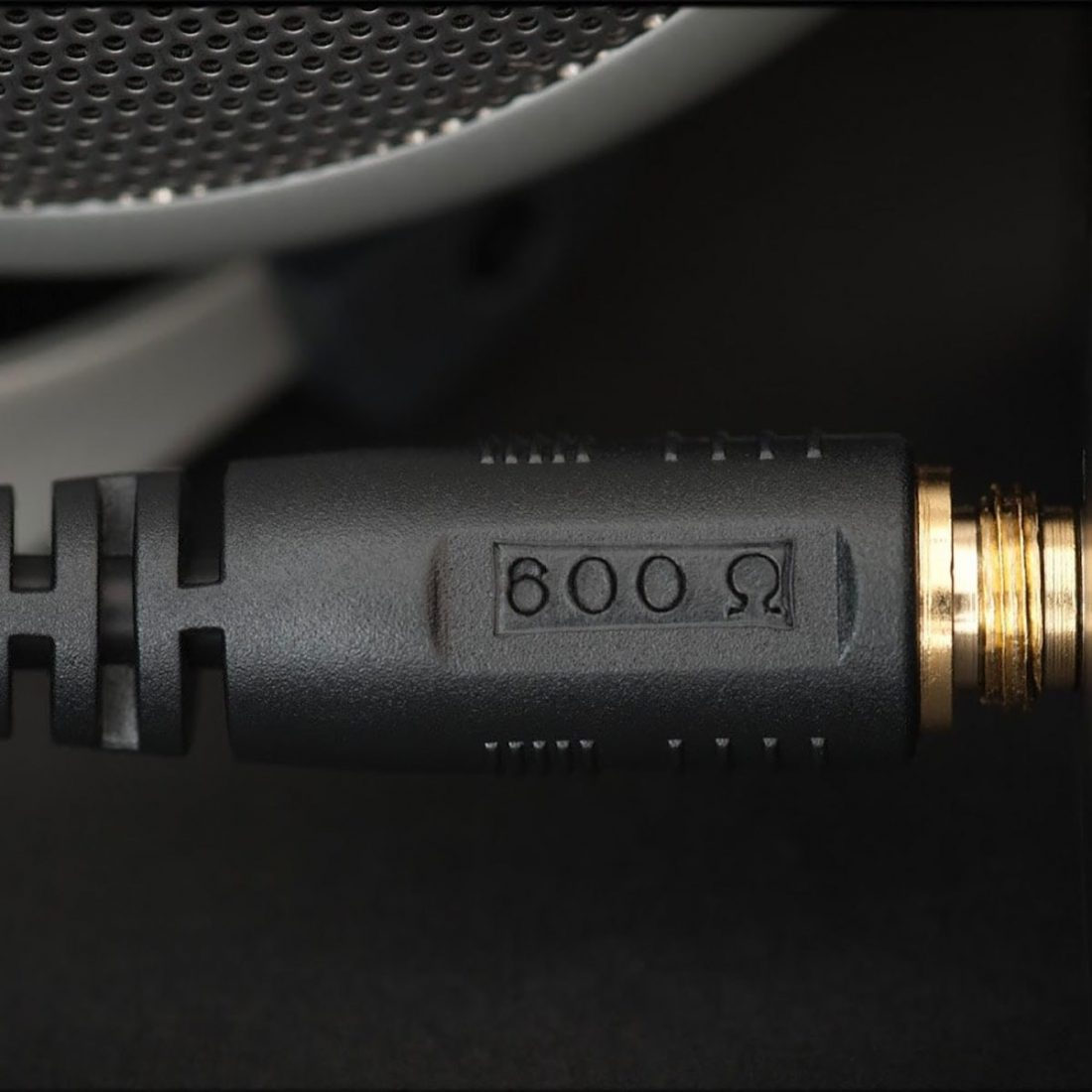
Customarily, a particular headphone model is only available in a single impedance. Beyerdynamic is i of the few (if maybe the only) major visitor that produces multiple versions of the same model, differing simply by impedance: 32, 250, or 600 ohm versions of the DT880 and DT990 headphones, and 32, lxxx or 250 ohm versions of the DT770.
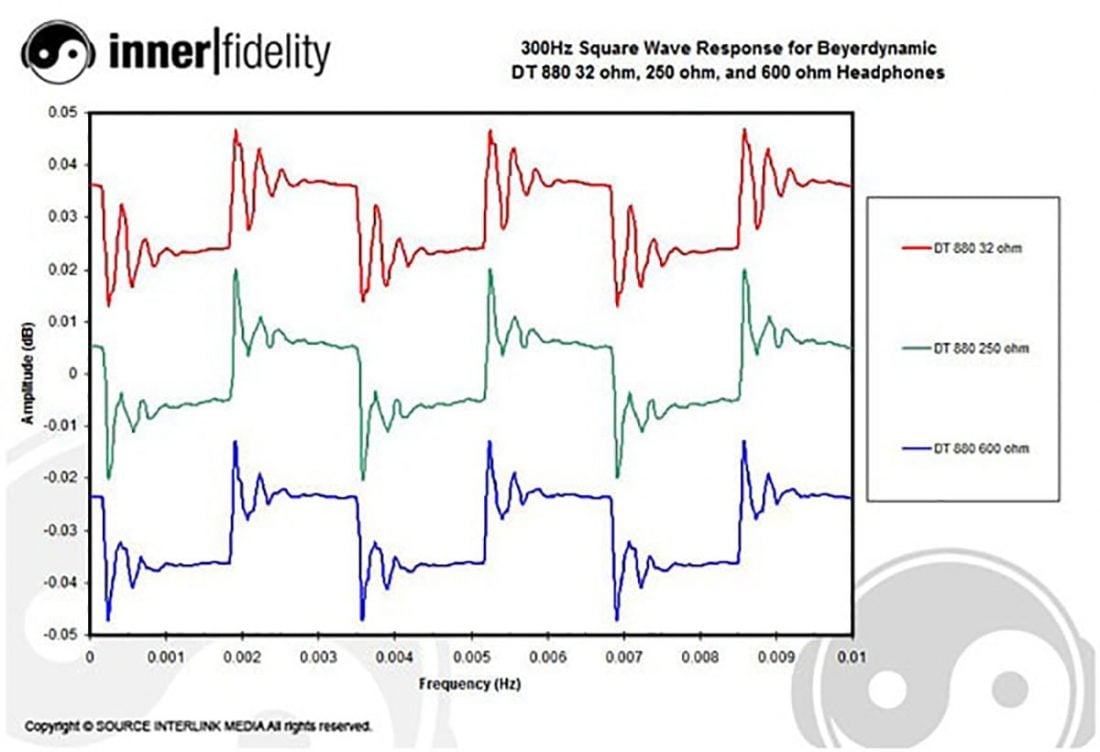
As y'all tin see the versions do not perform equally.
"The above graphs show the foursquare wave and impulse responses of the iii DT880 impedance headphones. Here yous can see that the 32 ohm DT 880 rings markedly more than than the other two headphones." – InnerFidelity
Steve Guttenburg of CNet explained:
"The impedance of a headphone is largely determined by the driver's voice coil, and for Beyerdynamic'southward high-impedance models the voice coil's wire is super-thin, simply 0.018mm, half the thickness of a human hair. Beyerdynamic's Senior Product Director Gunter Weidemann explained…
The thinner wires have more windings (layers of wire) on the voice-coil than the lower-impedance Beyerdynamic headphones, which have thicker and heavier, easier-to-manufacture vocalisation coils. The lower moving mass of the 250- and 600-ohm headphones' phonation coils is lighter than the 32-ohm models, and the lower mass is part of the reason loftier-impedance headphones audio improve. The smaller bore of the 600-ohm voice coil wires allows the wires to fit tighter, so there's less air betwixt the windings, and that makes the electromagnetic field of the vocalism roll stronger. All of that reduces distortion for the high-impedance versions compared with the low-impedance headphones."
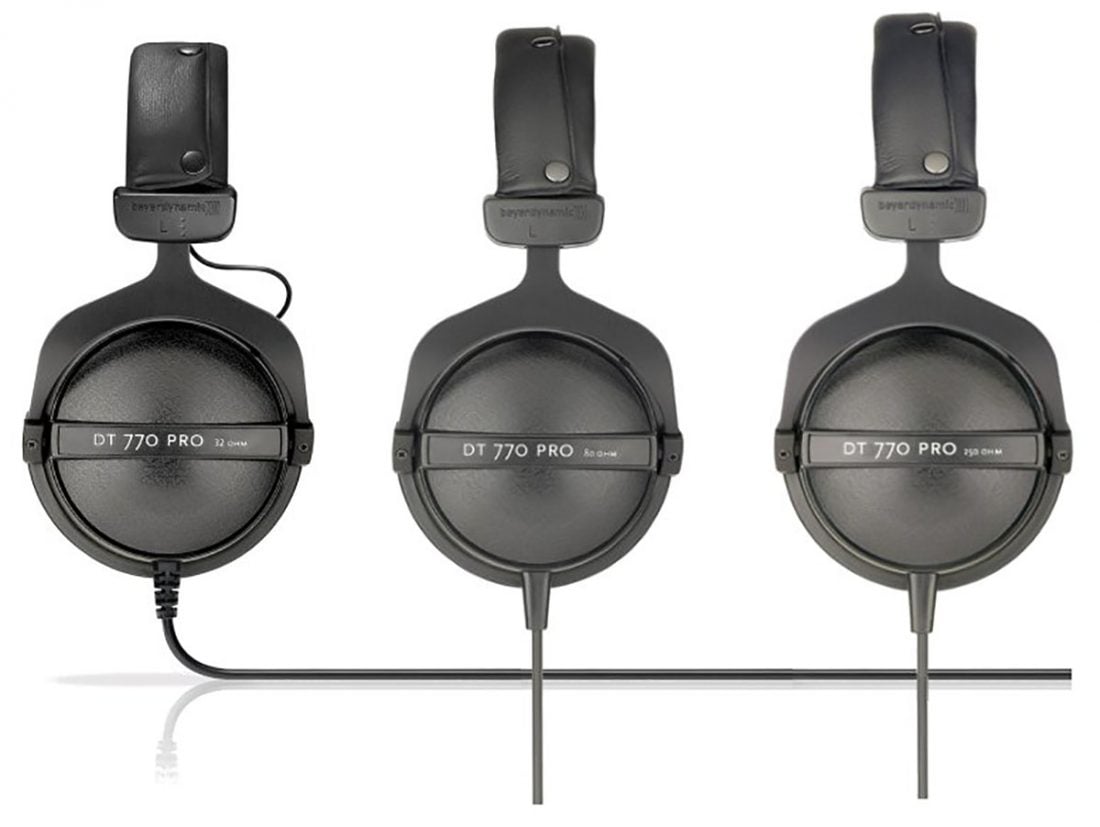
If properly matched to an advisable amplifier, information technology is possible to achieve an enhanced quality of sound with high impedance headphones, at to the lowest degree with specific designs like the Beyerdynamic models above. Please don't have this to mean that first-class sounding low impedance headphones exercise not exist. This is just one company's approach.
Headphone Sensitivity
Sensitivity (or efficiency) is a measurement of headphone volume at a specific ability rating.
Headphone sensitivity is often measured at a specific frequency (ane kHz) at 1 mW of ability. Sensitivity ratings are typically in the range of 90-105 dB (with outliers considered extremely sensitive or insensitive).
It would appear, with comfortable listening book levels of sixty-80 dB, a full i mW of power should seldom be required to achieve more than adequate loudness. Merely sensitivity ratings do non tell the whole story. We also need to take into account music dynamics and our amp's full harmonic distortion (THD).
For highly dynamic classical music, the recommended dynamic range (the largest to the smallest intensity of sound that can exist reproduced) is usually xx db. An increment of 20 db requires that one hundred times the power be delivered to the headphones.
With that much dynamic range, a one mW nominal sensitivity rating can quickly become a 100 mW power requirement for the amp. Amplifiers will also generally produce more distortion as ability is increased (although this isn't universal). In that example, a requirement for 100 mW at low distortion may atomic number 82 to an amplifier really rated at 1 Due west+ (amplifier power specs are typically given at i% THD).
How Sensitivity and Impedance impact Volume
Sensitivity and impedance are related but not causally linked. Both must be considered when pairing headphones and sources.
It is tempting to describe impedance as merely being resistance and use Ohm'south Law (Voltage = Current * Resistance) to illustrate, but Ohm's Law is really just applicable to DC (directly electric current). If impedance was the same as resistance, comparing identical headphones that differ only in impedance would result in the higher impedance headphone always being quieter than the lower impedance ane (given the aforementioned source voltage). However, this isn't ever and so elementary.
Information technology'south easy to understand that sensitivity and volume are directly related: all else being equal, more than sensitive headphones will be louder.
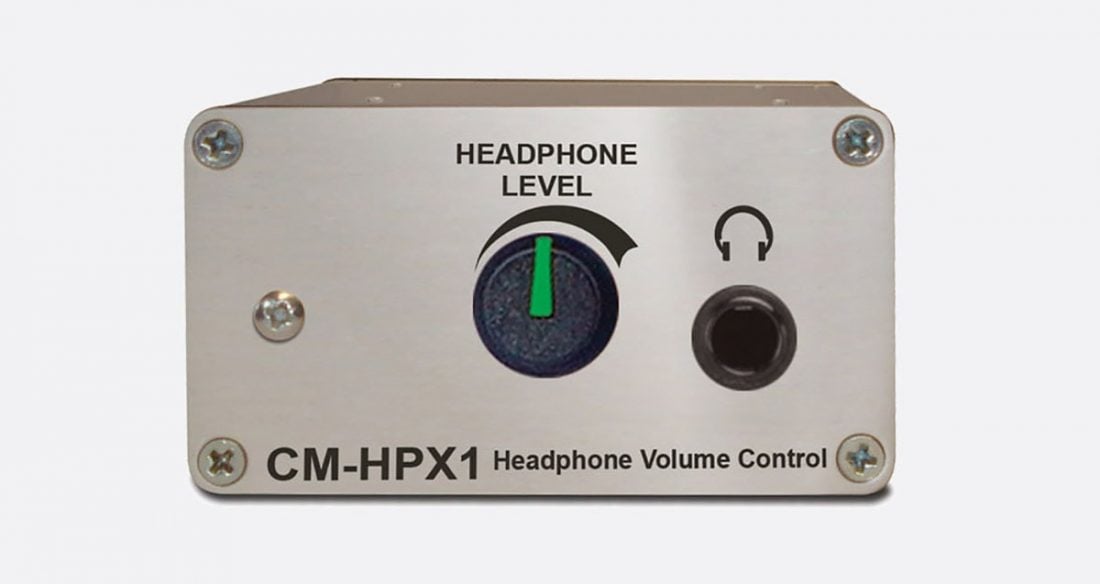
"Impedance… is more complex and measured with an AC electric current… Because music is an alternating signal, not DC, impedance is how headphones are rated. Impedance is made up of resistance, capacitance and inductance. Few headphones "look" like perfect resistors—about take significant inductance and at least modest amounts of capacitance. They're what's known equally a reactive load and the math is considerably more complex than merely the most basic grade of Ohm's Police force." – NwAvGuy (an anonymous engineer who created fantabulous and controversial DIY audio designs such equally the O2 headphone amplifier).
So understanding impedance isn't as simple equally considering load resistance. The source output impedance is an important factor as well. Loading of the transistors (or tubes) and bias (electric current) is also related. Amplifiers volition tend to deliver more voltage into higher impedance loads because the output impedance is not zero.
With a high output impedance source, high impedance loads tin provide more volume. An amplifier may exist incapable of producing much power into a depression impedance load if it is current express, while it would be happy making enough of power into a loftier impedance load. Dissimilar amplifier designs volition all accept unique specifications and abilities.
No wonder it is difficult to imagine what the results volition be when nosotros consider pairing headphones with a source. We can make educated guesses based on the specifications, just until you try it, you can never actually be certain.
It is enough to know that source impedance, headphone sensitivity and headphone impedance are all factors that play into the resulting audio volume and performance.
Comparing Headphone Sensitivity and Impedance
To farther complicate things, there is little consistency in headphone design with regards to impedance and sensitivity (even within a unmarried manufacturer). There are low impedance headphones that are very inefficient and vice versa. Models with low sensitivity and low impedance. Other that are low sensitivity, but high impedance. High sensitivity, low impedance. Etc.
From the following nautical chart listing a variety of headphone models with a range of impedances, it is easy to see many different sensitivities. It's pretty obvious that these headphones have differing source requirements.
| Headphone Model | Impedance (Ohm) at 1 Khz | Sensitivity (dB) |
|---|---|---|
| Grado SR80 | 32 | 98 |
| Meze 99 Classics | 32 | 103 |
| Hifiman HE-vi | fifty | 83.5 |
| Fostex TR50 MkIII | 50 | 92 |
| Shure SRH 1840 | 65 | 96 |
| Audeze LCD 3 | 110 | 102 |
| AKG K1000 | 120 | 74 |
| Sennheiser HD650 | 300 | 103 |
| AKG K240 | 600 | 94 |
| Beyerdynamic T1 (gen ii) | 600 | 102 |
Frequency and Impedance
Obviously, a headphone commuter is capable of reproducing a wide range of frequencies. A perfect driver would remain consistent beyond the full aural frequency range. Judge what? The typical headphone commuter is far from perfect.
Resonant Frequency in Dynamic Driver Headphones
The phonation ringlet in dynamic headphones is designed to properly control the driver and ensure expert beliefs at its resonant frequency. Resonant frequency is the frequency past which a cloth vibrates nearly hands – call back opera singers shattering crystal with a sustained notation.
Driver impedance is NOT linear with frequency for dynamic headphones.
Recall, most manufacturers state impedance at 1Khz in the headphone's specifications. This impedance is likely significantly lower than at the actual resonant frequency for that commuter. A frequency impedance graph for the driver illustrates a much more accurate picture. This resistance can multiply many times at the resonant frequency.
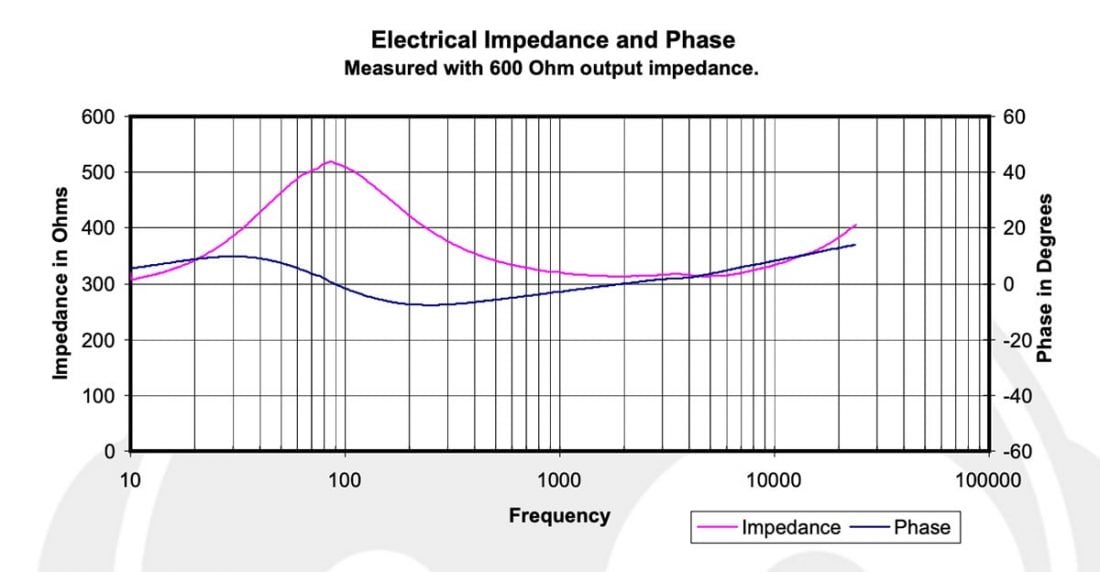
Dynamic driver headphones do not take a perfectly flat impedance response beyond all audible frequencies. Still, some designs are flatter than others.
"A very common complaint will be bloated bass from the variations in impedance on a depression impedance headphone, as a 32-ohm headphone may exist 100 ohms at resonance…." – Bottlehead Crack FAQ
Planar Magnetic Headphones
Planar magnetic (as well called isodynamic, magneplanar, or orthodynamic) drivers, basically an amalgam of electrostatic and dynamic drivers, deed differently than typical dynamic drivers. They apply an S-shaped pattern for the voice coil (unlike traditional circular windings) which tends to yield a depression impedance.
Still, much like dynamic drivers, not all planar magnetic headphones are the same. Some are easy to bulldoze with low impedance and high sensitivity like the HiFiMan HE 400s (22 ohms – 98 dB). Conversely from the same company, the HifiMan HE-half-dozen is notoriously inefficient and difficult to drive (50 ohms – 83.5 dB).
The largest deviation from traditional dynamic drivers is in the impedance response. Planar magnetic drivers do not have peaks and valleys, and are very flat across all frequencies. Planar magnetic and dynamic headphones of similar ratings will often have quite unlike amplification requirements.
"Amplifier Friendly: The circuits institute in planar magnetic diaphragms present an almost purely resistive load to amplifiers, making it easy to drive. The impedance over the entire frequency range is completely flat vs. dynamic speakers which could take variances in impedance values over the frequency range." – Audeze
Source and Load Impedance
The load impedance of a pair of headphones plays an important function in an amplifier's baloney operation. The operating voltage and current (or bias) chosen for transistors or tubes in amplifiers is optimized past the designer for low impedance loads, high impedance loads, or a compromise of the two.
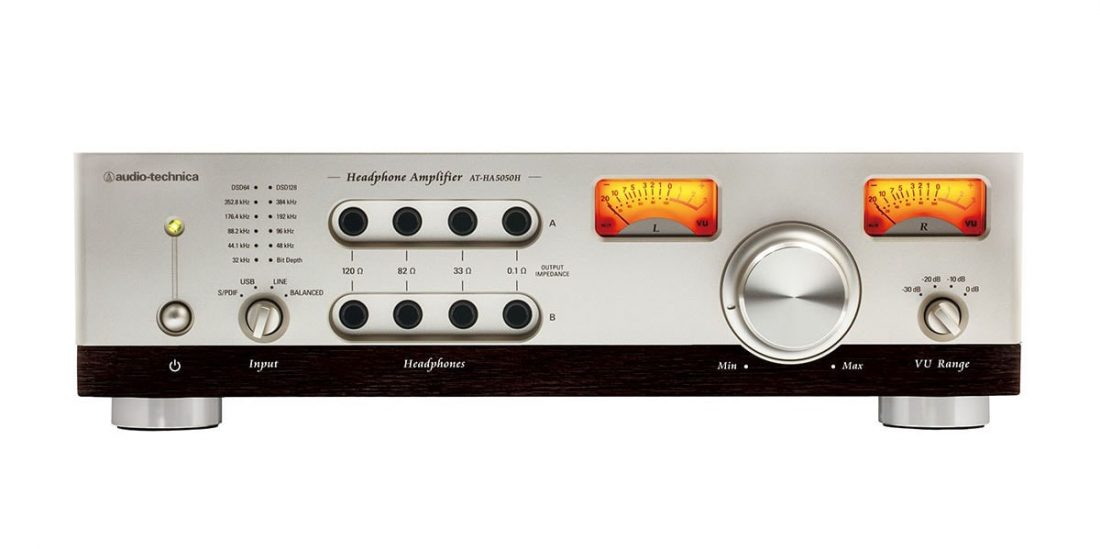
Connecting a low impedance load, when the amplifier is optimized for loftier impedance, not just reduces power, it likewise increases distortion. Some amplifiers take multiple outputs or switches that allow them to adapt to multiple impedance loads and remain optimally biased.
The ratio of output impedance and load impedance changes also dramatically at the impedance spikes – those frequencies with the highest impedance for a particular headphone. This can result in poor control of the driver (damping), and perhaps audible distortion at those frequencies.
"…the voltage delivered to the headphones will also modify with frequency. The greater the output impedance, the greater the frequency response deviations. Different headphones volition interact in unlike, and typically unpredictable, ways with the source. Sometimes these variations can be large and plainly aural." – NwAvGuy
For example, many Sennheiser headphones have an exaggerated frequency spike around 100Hz. The Sennheiser HD6xx line can require high voltage (iii-6V) at the spike, making it a poor pairing for many lower-powered mobile devices, simply an ideal match for the Bottlehead Crack OTL tube amplifier characteristics (120 Ohm output impedance and high voltage).
In general: High impedance headphones require higher voltage sources. Low impedance headphones require college electric current sources.
"The greater the output impedance the greater the voltage drib with lower impedance loads. This driblet can exist large to enough to prevent driving low impedance headphones to sufficiently loud levels. A real earth example is the Behringer UCA202 with a fifty ohm output impedance. It struggles with some 16 – 32 ohm headphones." – NwAvGuy
In general: High impedance sources provide loftier voltage but low current.
Equal impedance between source and headphones is good for portable power requirements, but not necessarily for sound quality.
Match for Best Performance
"Although it doesn't always appear in the specifications of headphone amps, output resistance has a nontrivial effect on frequency response, and hence on tonal balance." – Stereophile
While it is extremely unlikely that anything catastrophic or subversive will occur with headphone and source impedance mismatches, sound quality can endure.
"It is manifestly unacceptable that a customer should select a pair of headphones by careful listening at a retailer, only to experience a quite different tonal balance at domicile due to a dissimilar source impedance… to ensure consistent results, headphones and headphone amplifiers need to exist considered as a package." – Stereophile
Call it matching, pairing, synergy or just a case of plain old BFF, the source and the headphones must complement each other. As we touched on above, volume and sound quality can be greatly affected past impedance, requiring much more amplifier voltage to properly drive high impedance headphones, something that isn't piece of cake or possible to reach with virtually portable devices.
High Source Impedance and Low Headphone Impedance Bug
There are real bug with the combination of high source output impedance and depression headphone impedance. While often merely found in the extremes of OTL tube amplification, this scenario creates college harmonic distortion and noise, a low d amp ing gene, and bass whorl-off.
For every dominion and scientific caption you tin read, it is piece of cake to discover contrary subjective user experiences that claim slap-up success and impeccable audio performance against all odds. YMMV and read everything with a grain of salt.
Baloney
Typical solid-state headphone amplifiers often take VERY low output impedance (and high electric current). As a consequence, they piece of work well with a wide variety of headphone impedances. Nevertheless, pairing a headphone whose load impedance is lower than the amplifier's source impedance volition most likely create audible playback distortion.
This is why low impedance headphones are not recommended for high output impedance amplifiers, such equally OTL tube designs like the Bottlehead Crack or Darkvoice 336SE. Stick with very high impedance headphones (200 ohms and upwardly) for this type of amplifier.
Nwavguy explained that
"…higher impedance headphones also require less current to drive and that typically reduces baloney in multiple ways. It makes them more than allowed to output impedance differences between sources and also less sensitive to long cables and sharing a common wire in three wire cables and three wire connectors (i.e. headphone plugs and jacks). The amplifiers driving headphones nearly always produce lower distortion into higher impedances… Tube amps with no output transformers (similar the Bottlehead Crevice), for example, accept much college distortion into depression impedance headphones."
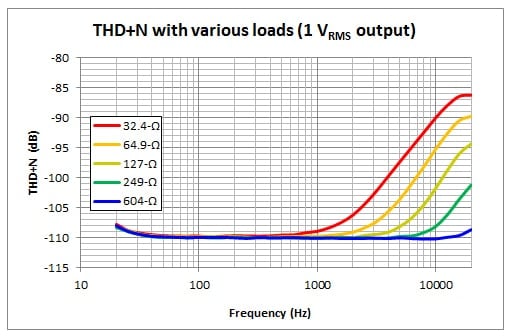
Damping Factor
Damping factor is the amount of control an amplifier has over the driver. It is oft described as the ability of the amplifier to control driver motion once the signal has stopped. Damping gene is well-nigh apparent in depression frequency reproduction, where low damping tin cause loose, boomy and indistinct bass, while high damping tends to make bass sound tighter and cleaner, but subjectively less warm.
Damping gene is measured as the ratio between the driver impedance and amplifier impedance, and is expressed in the format 'ii:1' (where the starting time number is the headphone impedance and the 2nd is the source output impedance) or as a single number '2' (as in this case to represent the driver impedance).
Commonly a damping cistron greater than ii.5:1 and nearer to viii:1 is considered optimal (headphone impedance 2.5x to 8x greater than the source impedance).
The term 'rule of eighths' is used as a rough guide. Divide the headphone impedance past 8, and that is the maximum source output impedance (32 ohm headphones / viii = 4 ohm maximum source output impedance). In exercise, it isn't that strict a rule and frequently success tin can be had with a greater range.
This ideal is based on the theory that regardless of how large an impedance spike is in the headphone commuter'south response, a high enough damping factor prevents the frequency response from varying more than 1 dB (not typically audible).
"…if an amplifier's output impedance is significantly more than an eighth of the headphone'south impedance, the frequency response and audio of the headphone can change. This results in bigger mismatches and creates more variation from the headphone's default audio signature. The way that a headphone responds to an amplifier with output impedance higher than one eighth of the headphone can exist entirely erratic – different headphones will respond in different ways, only generally the results will be negative." – RHA Audio
Bass Curl-Off
Bass roll-off refers to frequency response playback audibly decreasing towards the lower frequencies.
In general, yous should expect bass whorl-off using headphones with an impedance lower than 2x the source output impedance.
However, low-frequency response when matching headphones and amplifiers is a very complicated topic. Coupling between the amp and headphones (capacitors, transformers, etc) and the headphone'due south inductive reactance below its resonant frequency also contribute to bass roll-off.
Low damping factor is unremarkably associated with bass 'bloom' or 'smash' around the headphone's resonant frequency. In exercise, this as well leads to a perceived roll-off below resonant frequency (and a very measurable roll-off if the amp'due south coupling or output impedance are poorly matched to the headphones).
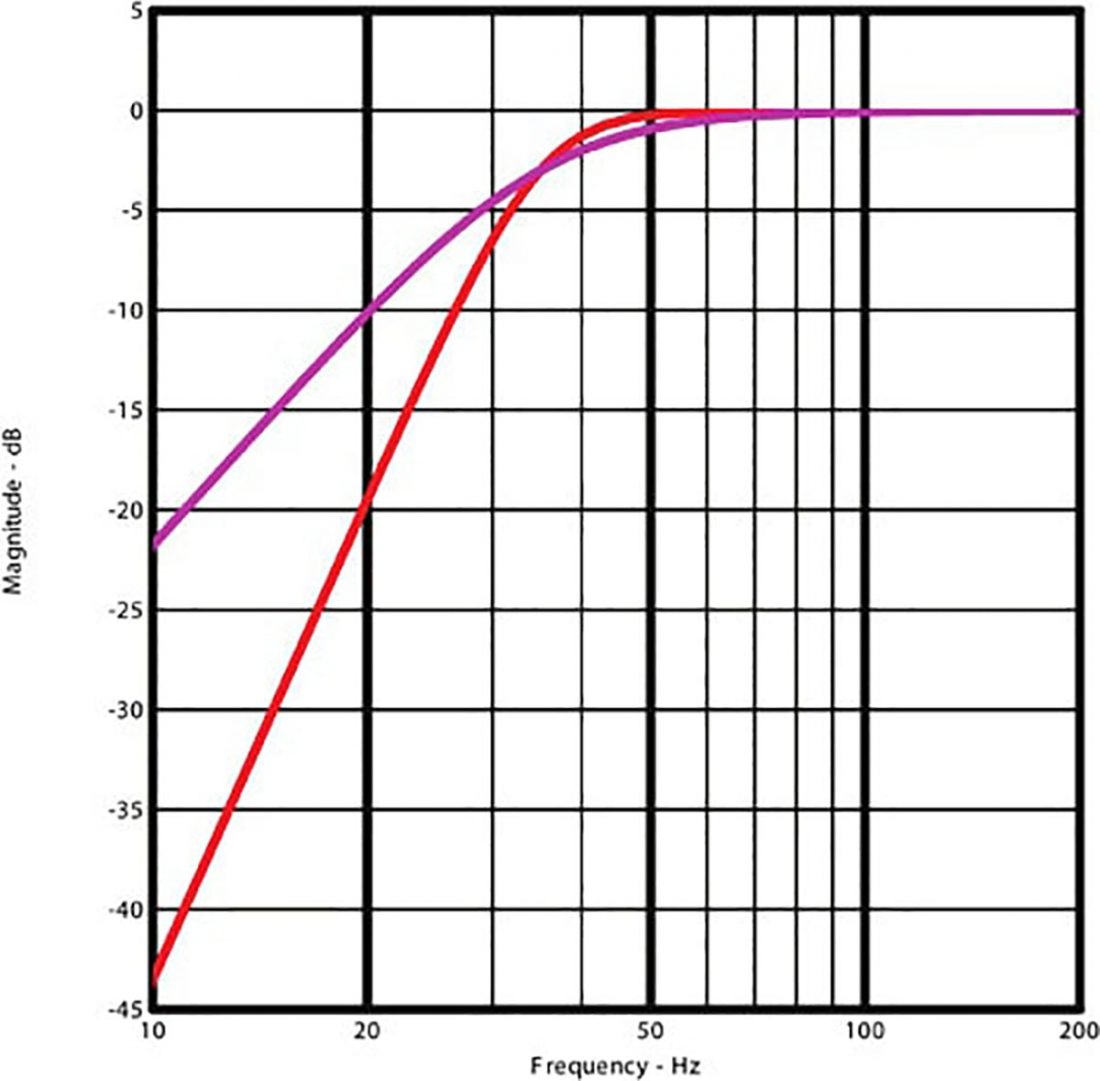
"As output impedance increases electrical damping is reduced. The bass performance of the headphones, as designed by the industry[r], may be audibly compromised if in that location'south insufficient damping. The bass might become more "boomy" and less controlled. The transient response becomes worse and the deep bass performance is compromised (the headphones will roll off sooner at low frequencies)… it'due south virtually ever less accurate compared to using a low impedance source." – NwAvGuy
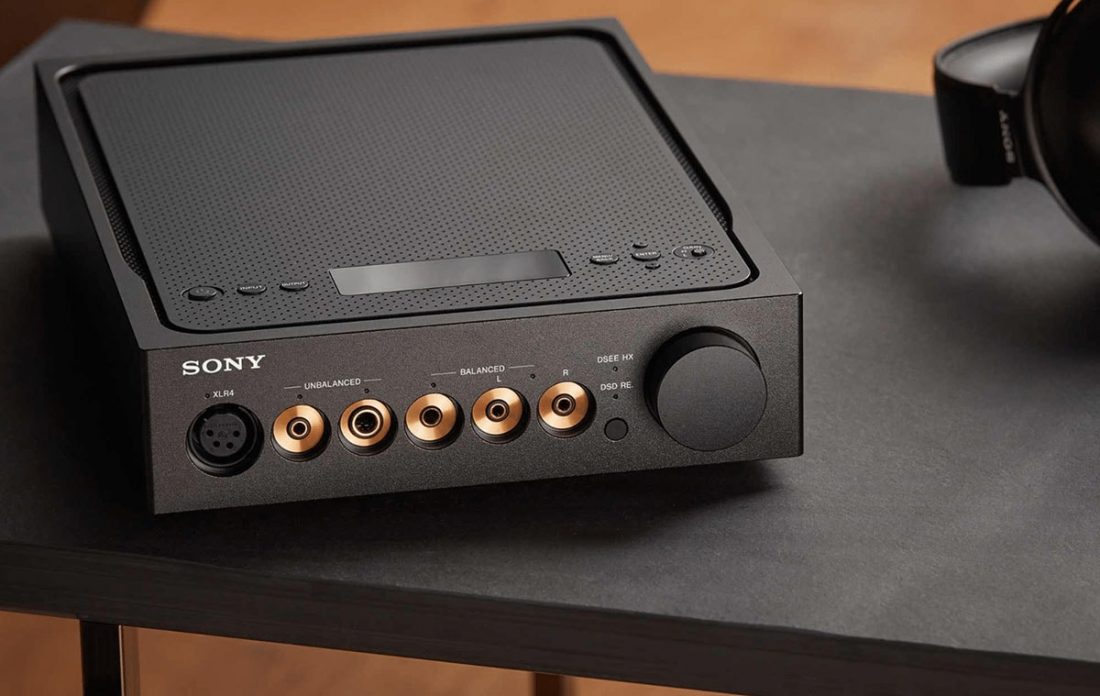
Balanced vs Unbalanced Amplifier Impedance
A typical unbalanced (single-ended) headphone amplifier is what we've been discussing in this article. It derives its proper name from the relative impedance to basis of the two connections in each channel (hot or positive and footing or negative). Because the impedance to ground differs, we call information technology unbalanced.
A balanced output however, has two point phases per aqueduct. Each stage has an equal impedance relative to ground, hence the name balanced. The advantage of balanced connections over unbalanced connections is common-mode dissonance rejection.
Because any interference is imprinted equally on the two phases' equal impedance, that common-way interference cancels out. The usual approaches to driving counterbalanced outputs can also impact sound quality because output impedance is effectively doubled.
"The damping factor will degrade past a factor of 2 because both amplifiers contribute to the source impedance of the balanced amplifier (output impedance is doubled). Distortion will usually increase because each amplifier is required to drive half of the impedance that would be seen by an unbalanced amplifier." – Benchmark Media Systems
"Balanced amplifier" is something of a misnomer. Balanced and unbalanced are types of interconnections between devices (like an amp and a headphone); these terms exercise not refer to specific amplifier architectures. Usually when you come across the phrase "balanced amplifier" it is referring to a differential amplifier without shared grounds and balanced outputs.
A variety of sources and amplifiers and their output impedances:
| Device | Output Impedance (Ohm) |
|---|---|
| Chord Hugo 2 | 0.025 |
| Schiit Ragnarok | |
| Chord Mojo | 0.075 |
| Schiit Jotunheim | |
| JDS Labs Cantlet | 0.ane |
| Monoprice Liquid Spark | 0.1 |
| Fiio A3 | |
| Schiit Magni | |
| Apple iPhone vii + adapter | 0.37 |
| JDS Labs Objective ii | 0.54 |
| iFi xDSD | |
| iFi Micro iDSD BL | |
| Fiio Q1 Mk ii | |
| Apple tree iPad Air | one.6 |
| Fiio M6 | |
| iFi xCan | |
| Apple tree iPhone 6s | 4.5 |
| Burson Sound Play | 8 |
| Feliks Elise | 40 - 50 |
| Bottlehead Crack | 120 |
Conclusion
Let's take a moment to summarize what we've discussed about impedance. It's a complicated topic, just it doesn't have to be confusing.
- There are two types of impedance (measured in Ohms): headphone impedance and source impedance. Impedance matching betwixt headphone and source is washed to ensure a proficient combination of sound quality and sufficient volume. A friction match means 'gratis' not 'equal'.
- Pairing a headphone with an impedance of 2.five-eight times higher than the source impedance should yield skilful results. This recommended ratio is commonly known as the 'rule of eighths' and contributes to proper commuter command (damping cistron). Pairing a headphone with an equal or lower impedance than the source volition likely issue in unpredictable (poor) sound quality.
- Sensitivity is as well an important factor in headphones, and is a measurement of loudness at a certain power input (commonly given as decibels per one mW). While sensitivity and headphone impedance both influence volume, they are not linked. Headphones vary greatly in impedance and sensitivity and both must exist considered when selecting an appropriate amplifier.
- Sensitive (100 dB+), low impedance (8-32 ohm) headphones will typically pair well with a portable source (such every bit a telephone) without much do good from a carve up amplifier. Less sensitive (less than 95 dB), and/or medium to high impedance (more l ohm) headphones will typically benefit in sound quality and volume with a more robust amplifier than a telephone (or portable device) provides.
- Headphone impedance ratings can be misleading considering dynamic headphones vary in impedance at different frequencies and are non flat in response (the rating is for a unmarried frequency). Planar dynamic drivers do not suffer from this trouble and are flat in impedance across all frequencies.
- Higher impedance headphones require more source voltage (something portable devices are not skillful at) and lower impedance headphones require more source current (something OTL tube amplifiers are not good at providing).
- While some high impedance headphones are made to an elevated standard (such equally utilizing thinner vocalisation curl wires) and tin can be capable of lower distortion, higher impedance does not necessarily equate with improve sound quality.
NwAvGuy tells u.s. that "…a "perfect" source has an output impedance of zero ohms. This ways it will always deliver the same output into any load." Since we alive in the land of compromise rather than perfection, we have to make educated decisions when selecting an amplifier for our headphones.
Luckily, there is almost a guarantee that someone out there has tried and written (or YouTubed) nigh their experiences with the combination of headphone and source you are considering.
Now you know to disregard or be skeptical when you hear that "impedance is unimportant" when considering new headphones or amplifiers. Contrary to some opinions, it's not all well-nigh sensitivity. Those folks take probably never considered the audible impacts of source and headphone impedance matching.
Personally, I occupy a very specialized niche of the headphone world. I own (and love) a Bottlehead Crack OTL amplifier. This means that my headphone choices are VERY limited when selecting an appropriate pairing; at that place are very few 200+ ohm headphone options. Luckily information technology sounds so skilful that I'm happy to live with the limited option.
Of course, information technology does require that I ain a few solid-state amps (as well) for all those other low impedance, low sensitivity headphones that I tin can't resist. The sacrifices we must make for a hobby!
washingtonforideare.blogspot.com
Source: https://www.headphonesty.com/2019/04/headphone-impedance-demystified/
0 Response to "What Does a Reading of 80 Ohms Mean"
إرسال تعليق